 Dermaneedling for Alopecia
 What you need for dermaneedling your skin issues
 See how competing devices cause skin microtearing
 Copper peptides for dermaneedling
 Dermarolling explained
 How dermaneedling works
 Psychological aspects of stretchmarks and the beauty cult
 Dermaneedling side effects?
 Stretchmarks: Single needle before and after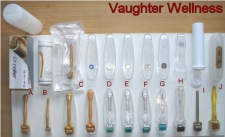
 What to do about Cellulite?
 Dermaneelding: Hype vs. reaslistic results
 Progress pics: Acne scars, stretchmarks, pigmentation
 SkinPen review: Deceptive advertising!

Dermaroller review
The "original dermaroller" is a patented Swiss invention, and the creators only sell to medical professionals for a reason. These rollers are sold to upmarket beauty clinics as a kind of extortion scheme: "If you don't want to be sued for patent infriction you have to buy our roller". Apart from the (non-enforcable due to prior art) patent, there is nothing special about these "original" rollers. They're simple devices that can be re-used when cleaned and disinfected/sterilized after use. For do-it-yourselvers, there is a multitude of models to choose from:
Why we test dermarollers
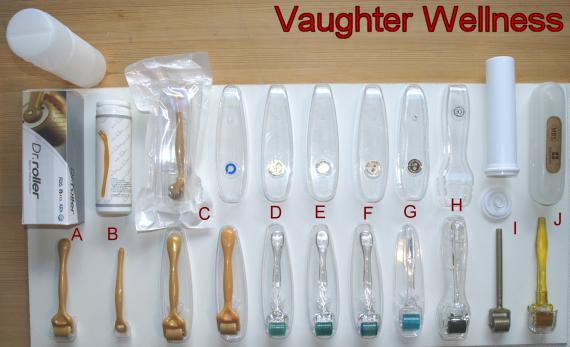
We have been in the dermaneedling business since 2008 and since then, we regularly review nearly all dermarollers that are sold to private individuals. Brand-independent as we are, based on what we find in our tests and the feedback of our customers, we decide what rollers to include in our assortment. What follows is a very unusual dermaroller review, because it is also honest about some of the dermarollers we sell. Because we are the largest dermaneedling vendor in the world (and we got there by being honest), we are in the unique position to give accurate statistical figures of how great the likelihood is that you'll get a defective Dr. Roller, for example.
Not all dermaneedling vendors are trustworthy
None of the roller factories sell directly to the public. They do not employ English-speaking people. They are just huge SE-Asian gadget factories. Instead, they sell to mostly unscrupulous agents in the region, who's only objective is to make a quick buck. The agents all sell under different names on eBay and Amazon and on various websites where they promise miracles with their dermaroller. Those agents are completely clueless and disinterested in regard to dermaneedling. They are business people, always South-East Asian males around 25 years of age. The cheap rollers sold by them are the worst of the worst - bent needles galore.
And then there are the many sites made by those interested in anything that "makes money online". A good example of this is the "Scientia roller", which is nothing but an overpriced Dr. Roller with the packaging and instructions removed. Such companies look for a quick buck, a profitable niche, a way to expand their network of affiliate marketing. None of them are actually interested in helping people with skin issues, or know anything about the topic apart from some stuff, usually copied from websites like ourselves. Another example is someone in Israel, pretending to be a genuine user/manufacturer of dermaneedling products/serums on his blog "homeroller" (homedermarolling.org), which is in reality nothing but a well-oiled sales machine run by a professional internet marketing specialist/ad designer selling questionable but highly profitable serums and oils, pretending he is not affiliated with the company whose dermarollers he endorses.
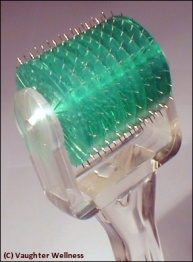
One of the dermarollers in our test was "dead on arrival": Its needles had penetrated the blister packaging and some were bent. We found that the needles were of textile-grade steel instead of surgical steel, and the handle was too flexible to apply constant pressure. We did not even test this one further or assign it a letter - we wrapped it in Scotch tape and binned it after taking these photo's. Update: The SRS Micro Meso roller and the Dermal Integrity rollers both seem identical to this roller, except for a fancy looking box.
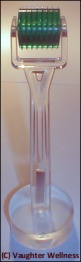
Note the handle shape. It is neither ergonomical nor strong - the handle bent when using only moderate pressure. So the roller below was so bad that we did not test it further:
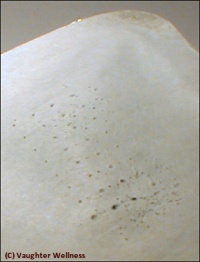
Model I was the runner-up in the bad roller department. A hopeless handle, impossible to get a good grip on. Model J was very heavy and the box it came in was dusty - it looks like the model is very old stock.
Dermaroller review criteria
We examined the needles under a microscope and the roller heads under a magnifying glass. We soaked all rollers for a night in Ethanol. We put all rollers in boiling water for a few minutes - do not do this with your roller - it will warp and crack the plastic - we did it as part of the needle sharpness tests. After the immersion in boiling water, I tried the roller on my thigs to verify that the needles were still sharp. We tried to pull out the needles with pliers. We vigorously rolled each roller over hardboard for two minutes and then made a closeup picture of its needles to see if they were still sharp.
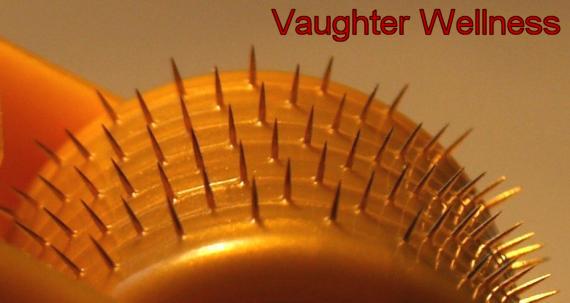
The Korean Dr. Rollers's needle quality has recently gone downhill
No dermaroller review can ignore Dr. Roller because it has always been recognized that the Korean Dr. Roller used to be the best dermaroller avalable. Dr. Roller is made by Moohan Enterprise Co. and represented by Ace MTS in South Korea. The quality difference compared to Chinese dermarollers has always been clear. We have sold Dr. Roller for years, but we phased them out due to repeated complaints of bent needle tips. Below is a photo sent by our customer B. Bauer (the red arrows are by us):
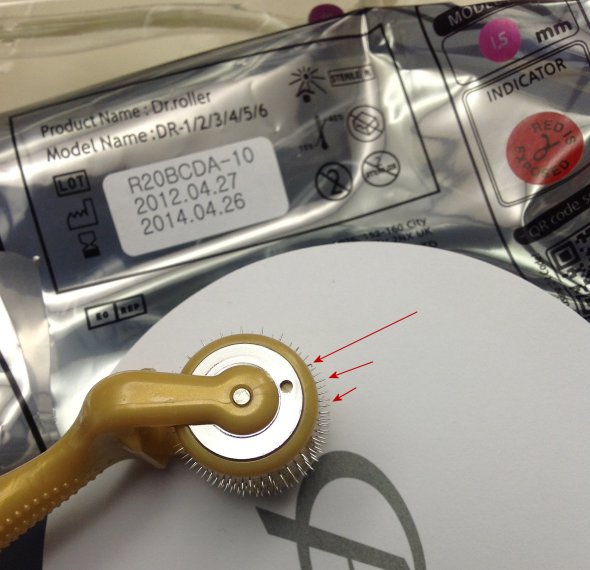
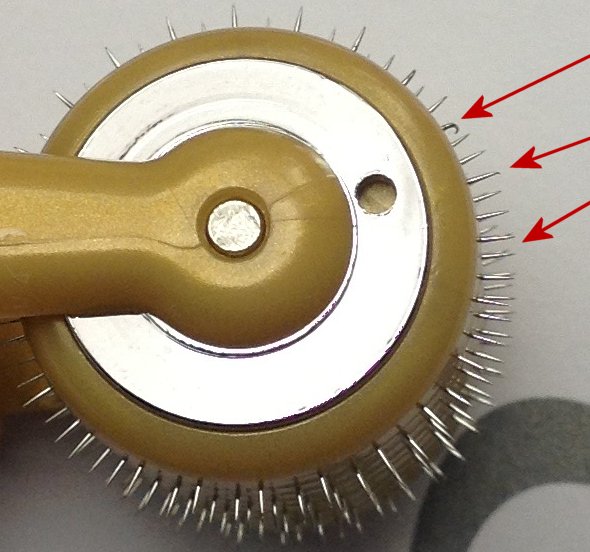
Ace MTS, the exporter of Dr. Roller was notified and they emphatically apologized and offered us ample compensation. We refunded the customer and sent her two replacements. Sadly, after this incident we received two more customer complaints. We stopped selling these rollers completely, even the short-length needle models.
Dr. Roller is expensive but cheap copies exist
We used to sell Dr. Roller clones (roller C in our test) for years but also phased them out after greatly reducing their price because the last time we let the factory produce a batch for us, we received quite a few complaints about their quality. So nowadays, approximately 1% of these rollers have some kind of flaw, for example:
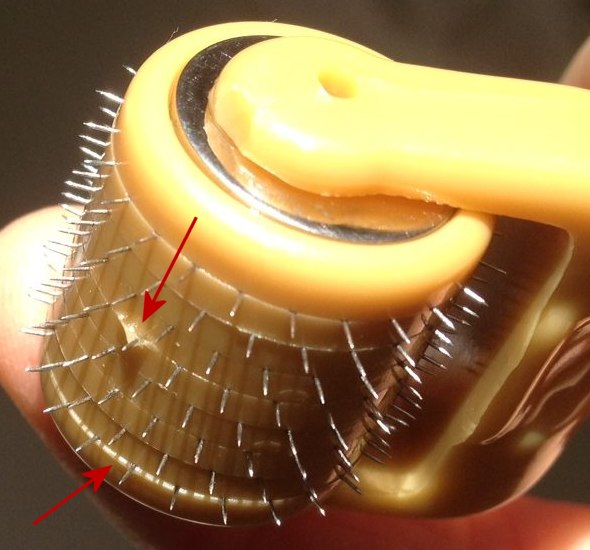
You can see that the roller head disks are not properly aligned and that some plastic or glue is protruding. Our replacement policy for bad rollers of this type is the same as for the Dr. Roller brand: We refund the roller and send two replacements.
540-"needle" dermarollers damage the skin
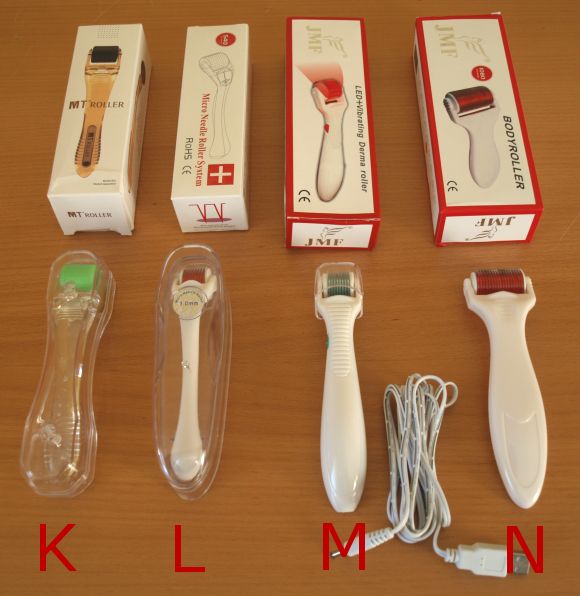
Model K has no staggered needle pattern and we therefore do not recommend it. Models L, M and N all suffer from the same problem: The needles are not needles at all, but stamped knives, as can be seen in this magnification:
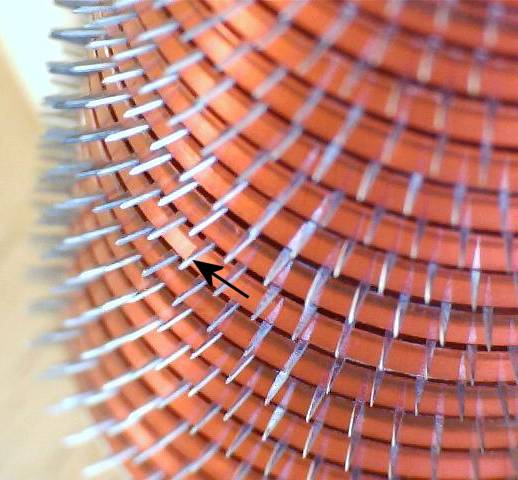
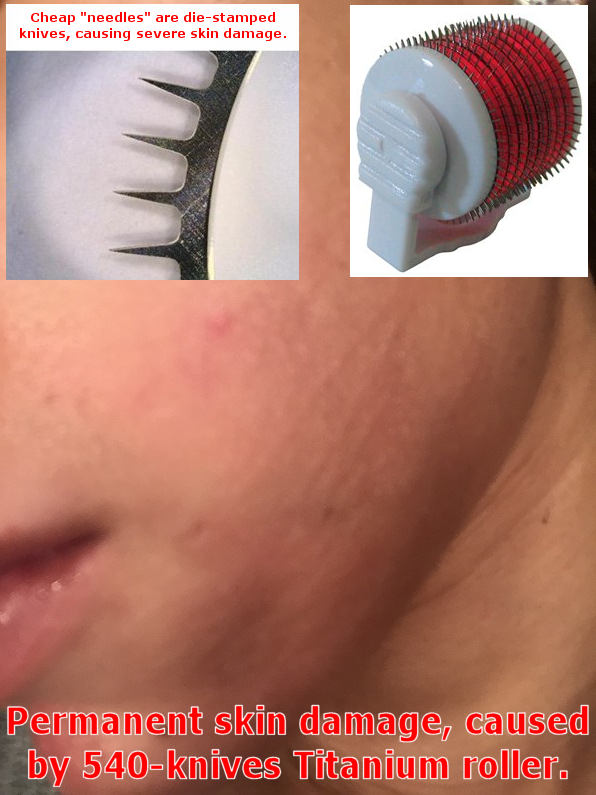
We do not recommend these type of "needles". There is a reason the techique is called "micro-needling" and not "micro-slicing" or "micro-cutting". There simply are no clinical results available for this type of roller. The manufacturer in our opinion wanted to launch a "special" dermaroller and did that by offering many more "needles". However that would be expensive and impractical, construction-wise, so they created an entire row of "needles" by stamping knives out of (alleged) Titanium. On April 20, 2015 we received this photo from a customer of the "Banish Acne Kit", showing severe damage to her skin caused by this type of roller:
Vibrating/LED dermarollers are fake nonsense
Model M is worth an article in itself, because it is a scam. Vibrating/LED dermarollers are a fraud, because we found that the needle head is not vibrating - only the handle is. Inside the handle is the same device that makes a phone vibrate. The needles themselves don't vibrate at all, due to the dampening effect of the handle being held in the hand and due to the loose coupling between the roller head and the handle. The LED light is an even bigger scam: Due to practical design considerations the LED is mounted into the handle and shines onto the wrong side of the roller head, so that it only shines onto the needles that are are on the opposite side of the needles that are entering the skin! So the vibration and the light reach neither the skin nor the needles in the skin, making the device an expensive ripoff. Also, it is highly questionable that vibration and light would benefit the process at all. Note how this scam comes from the same company that invented the 540-"needle" roller, only they forgot to mention that it's not needles but knives that cut a slit into the skin instead of pierce a hole into it.
Problems seen with cheap Chinese dermarollers:
- Bent needle tips (up to 180-degree curves)
- Some needles stick out too much
- Detaching needles due to sloppy gluing
- Needle taper too short/blunt for skin needling (painful or won't penetrate at all)
- Needle length incorrect (also due to wrong labeling)
- Uneven needle spacer rings
- Wobbly roller head
- Roller head getting stuck
- Glue that holds the needles in place loosens the needle after soaking in alcohol
- Non-sterile production, contamination with eye lashes or even blood from handling by production crew
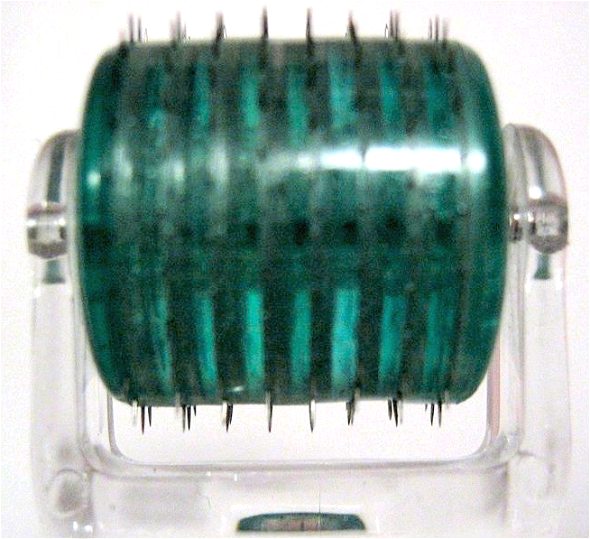
The two most notorious offenders, selling downright dangerous dermarollers are Melya Beauty (Luvis Wu) and ZmartBeauty (JaySun trading / Jason Tsang). An example of the shoddy workmanship of the "MT roller" (this roller is sold by many vendors under various names, we list them as D, E, F and G) sold by ZmartBeauty:
China is capable of producing excellent rollers
While it is true that China is usually associated with inferior product quality, it is not true that everything made in China is bad. China is an economic superpower and they have become the #1 producer for just about everything. If you search hard enough for a serious factory (agents posing as factories are the norm..), agree to pay a price that affords a quality product and keep monitoring quality, you will be able to find a manufacturer that can produce an excellent dermaroller for a price far below that of, say, Dr. Roller. Recently, because we were not satisfied with the quality of the available Chinese-made dermarollers, we decided to launch a home-brand dermaroller, made in China but of a quality comparable to, or better than Dr. Roller - only much cheaper. This new roller launched by us (Vaughter Wellness / OwnDoc) has a white handle and an amber roller head:
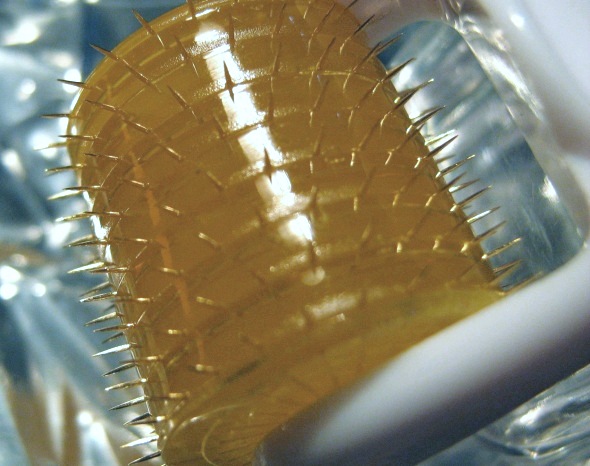
An extreme magnification of the needles can be seen below:
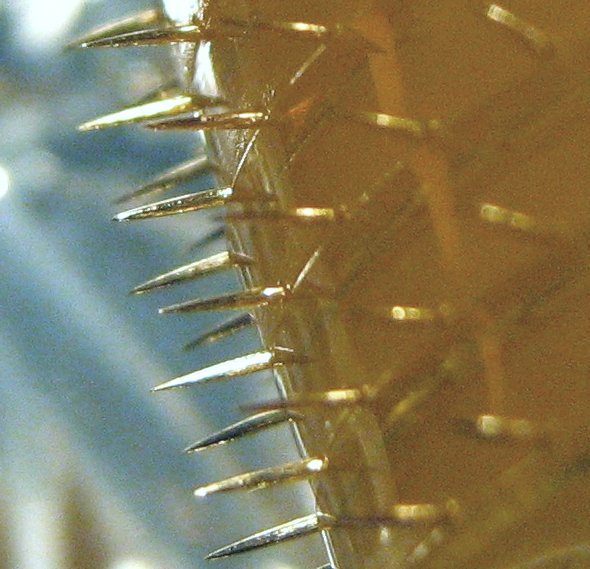
The needles are perfectly straight, have a very long taper and there is not the slightest onset of oxidation. The roller disks are well-aligned so it is easy to properly clean and disinfect/sterilize the roller head. Smoothly aligned spacer disks prevent the buildup of skin detrius. These are the rollers we sell in our store.